Showing posts with label AART. Show all posts

Wednesday, September 1, 2010

Richmond Theatre Critics Circle Awards

Posted by Bruce Miller
The nominations for the RTCCAs (popularly pronounced Artsies or Ratcocs, depending on the sassiness of the one doing the pronouncing) were posted on Dave's Theater Blog late Monday evening. Many also refer to the actual awards as "hockey pucks," because of the circular design of the handsome acrylic trophies that are handed out. Meaning no disrespect, I've chosen a Canadian hockey puck to illustrate this article because: A - I couldn't find a photo on line of an actual Artsy, and B - well, I'll let you speculate about B.

Because I swim in the technological backwaters, I knew nothing about the announced nominations until Tuesday morning when I read a nice message that Jacquie O'Connor wrote on my Facebook wall. Our Managing Director, Phil Whiteway, received some sort of message on his blackberry, or whatever phone thing he has, on Monday night. From all reports, the phone of our Associate Artistic Director, Chase Kniffen, began ringing furiously shortly after Dave's initial posting.

I'm so out of the loop that it sometimes startles me.

Anyway, what a nice surprise to discover that Barksdale and Theatre IV are parties to 48 nominations--49 if you count our connections to Neil and SaraBelle November. I greatly appreciate all this recognition.

I really really really don't envy the Richmond theatre critics and the challenges they face in trying to come up with this list of nominees. I think it's great that they're giving kudos to theatres and theatre artists in Richmond. As an economic sector, we need all the attention we can get. But their job is next to impossible. With so many worthy performances, how can anyone possibly choose one set of theatre artists over another. All I can say is, I'm glad I don't have to do it.

My job is an easier one. I get to Monday morning (Wednesday night?) quarterback and make some additional "nominations" of performances that I admired, performances that didn't make it on to the final roster selected by the critics. My "nominations" represent nothing more than one humble opinion--which ain't worth squat. Like the critics, I'm sure I too will leave out people I really liked and am now forgetting, but since these nods of mine carry no weight whatsoever, I hope everyone will put up with my whimsy.

I also get to toss out some comments that have little to do with anything, but interest me nonetheless. It's a blog. So sue me.

First off, I loved everyone in the acting and design teams of the three shows I had the privilege to direct this season: Boleros for the Disenchanted (the wonderful and nominated Carmen Zilles is pictured to the left, next to the wonderful and not nominated Michelle Guadalupe), First Baptist of Ivy Gap, and On Golden Pond. Since I'm completely biased in their favor, I won't single out any one of them individually for recognition here. Except one. I know Joe Inscoe is nominated several times for other performances, but not to nominate him for On Golden Pond?? I thought he was exceptional. I'm just sayin'.

I'm a little surprised (but delighted) to see that Souvenir is considered to be a musical. At the end of the day, I don't care if the critics call it a musical, a non-musical, or an egg salad sandwich--I'm really glad that the excellent work that went into this show was recognized.

I already wrote to Jase Smith individually, and told him I thought his direction of Rent represented his best work thus far and deserved a nomination. I also think that Terence Sullivan was terrific in Rent. In my opinion, he was the major new "discovery" of the year. I thought Durron Tyre was incredible in Rent and deservedly nominated, but I don't think the character of Tom Collins is a lead. In my little world, Durron should be up for Best Supporting Actor in a Musical.

In like manner, I was surprised to see that Ford Flannagan's wonderful performance in Putnam County Spelling Bee was nominated in the Leading Actor category, while Debra Wagoner's performance in the same show in a role that was actually larger than Ford's was recognized in the Supporting Actor category. It seems like both of them were outstanding supporting actors to me.

And speaking of directors--I was, a couple paragraphs back--I thought Molly Hood (pictured to the left) did a terrific job with Twelfth Night. Here again, I applaud each of Barksdale's and Theatre IV's directors, but I'm biased so I won't single them out.

I enjoyed noting that The Sound of Music was abbreviated SOM and Servant of Two Masters was abbreviated SOTM. It reminded me of the previous season when Barksdale did Children of a Lesser God and Stage 1 did Children's Letters to God almost simultaneously. Good times. It made me try to think of other plays we might have produced last season with titles that could be abbreviated with some variation of SOM. But I came up with bupkis. It's late at night.

I think the strongest category may be Best Supporting Actor in a Play. All five nominees are equally deserving. And I can think of more than a few others who turned in equally impressive performances in this category--too many to single out. I'm excited that there's a new category for original work--something lacking in the past.

Maybe next year the critics can consider recognizing a break-through performance by someone previously unnoticed, or maybe a "Most Outstanding Debut" category. I thought Laurel Maughan, who is new to our ranks, contributed greatly to Twelfth Night. In the veteran category, I though Jackie Jones was particularly noteworthy playing Golda Meir in her one woman show at the JCC. Somewhere in between, Joe Carlson impressed, I thought, in Grapes of Wrath, carrying a difficult show on his emerging shoulders. Joe will contribute greatly to Richmond theatre's future, should we be lucky enough to hang on to him.

I'm so pleased that Hanover Tavern received some recognition this year; the Tavern was completely shut out in years one and two. I know there will always be those who feel under-appreciated, just like all of us at Hanover Tavern felt in 2008 and 2009. But I think the critics do an outstanding job trying to recognize good work everywhere, and trying to maintain a balance.

Richmond theatre lives and dies by its breadth and depth, and the critics work hard to find examples of excellence almost everywhere. Our theatre community would be greatly diminished without the estimable talents found at our dozen colleague nonprofits: African American Repertory Theatre, Cadence Theatre Company, Carpenter Science Theatre, Chamberlayne Actors Theatre, Firehouse Theatre Project, HATTheatre, Henley Street Theatre, Richmond Shakespeare, Richmond Triangle Players, Swift Creek Theatre, Sycamore Rouge, and the brand new Theatre in Battery Park.

Last but not least, I'd like to tip my hat to the kids in The Sound of Music--maybe in the best ensemble category. They were amazingly talented, professional and accomplished throughout a lengthy run, and were at the very heart of Central Virginia's most popular show of the past season.

So, those are a few random thoughts, signifying nothing. Again, I think the critics are doing a great job and I don't envy them. There's no way they could satisfy everyone. So I salute them, and thank them for their service.

--Bruce Miller

Monday, May 24, 2010

Regina Taylor, Author of "Crowns"

Posted by Bruce Miller
Our current production of Crowns is co-produced with African American Repertory Theatre, and directed and choreographed by Leslie Owens-Harrington. This entertaining and inspiring musical is written by acclaimed American actress, Regina Taylor.

Taylor is the sixth African American woman playwright whose work has been produced on the Barksdale and Theatre IV stages. Playing the Six Degrees of Separation game, it's interesting to discover the people (and themes) that connect us with this exemplary American theatre artist.

I first encountered and grew to admire Regina Taylor in the early 90s when she starred in the critically acclaimed TV series, I'll Fly Away. My friend (and Barksdale favorite) Joe Inscoe also appeared in that television classic, playing a Southern antagonist to Taylor's character.

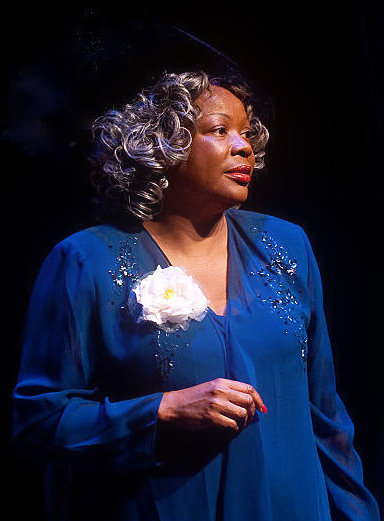
Some of you may best know Taylor from her more recent TV series, The Unit. She played Molly Blane, wife of Sergeant Major Jonas Blane. Molly was the strong-willed homemaker who held all the military wives together when their fighting men were called away on active duty.

The Unit was created and executive produced by another great American playwright, David Mamet. Co-starring with Taylor in The Unit was Scott Foley, who played Sergeant First Class Bob Brown. Foley's brother-in-law is acclaimed stage and screen actor Patrick Wilson, whose father, John Wilson, starred in Barksdale's productions of The Fantasticks in 1963 and Generation in 1968.

Taylor was born in Dallas, Texas. When she was in the second grade, she moved with her mother to Muskogee, Oklahoma. Her mother was a Social Service Administration employee and transfers were common.

Having a professional mother provided inspiration to Taylor as she was growing up. "She taught me never to set limits on who I could be," Taylor states in People. "I developed an active imagination very young and was always writing plays and musicals."

Taylor's mother also encouraged a sustaining sense of pride and identity in her daughter. When she entered seventh grade, Taylor enrolled in a newly integrated school. On the first day of session, a white classmate sitting next to Taylor loudly informed the teacher, "I do not want to sit next to this nigger."

Taylor was shaken when she encountered this level of racial hatred for the first time. "I thought, 'How can she hate me when she doesn't know me?,'" Taylor states in People. Later she realized that this early encounter helped her to understand the racial prejudice to which her mother's generation had been subjected. In many ways, this understanding helped to prepare her for her career.

When the founders of Barksdale moved to Hanover from New York, they encountered for the first time the racial hatred exemplified by the Jim Crow Laws, which prohibited mixed-race audiences at any arts event. Facing possible arrest, Muriel McAuley and Pete Kilgore defiantly invited African American leaders from Virginia Union University to attend their plays in 1954, becoming the first arts organization in the state to do so. Not only did they break the law, they broke the back of that particular Jim Crow Law forever.

During her high school years, Taylor and her mother moved back to Dallas. After graduating from high school, she enrolled at Southern Methodist University. While still a student, she was cast in the 1980 TV series Nurse and 1981's made-for-television movie Crisis at Central High, playing Minnijean Brown, one of the nine black students who in 1957 risked everything to proactively effect history when they enrolled in the previously segregated Central High School in Little Rock, AR.

After college graduation, Taylor moved immediately to New York. Her big break came in 1986 when she was cast in an innovative project of the New York Shakespeare Festival - Joseph Papp, Producer. The project was called Shakespeare on Broadway for the Schools. Three Shakespearean masterworks were produced in rotating rep for reduced-price student performances: As You Like It, Macbeth, and Romeo and Juliet. John Moon, who directed Barksdale's just-closed production of Is He Dead?, was working in the casting department of the Shakespeare Festival at this time. Taylor was cast as Celia in As You Like It, the First Witch in Macbeth, and Juliet in Romeo and Juliet, becoming the first actress of color to play this iconic role on Broadway.

In 1989, Taylor received national attention for her role as the drug-addicted mother of a gifted student in the hit film Lean on Me. This led to her TV stardom playing Lilly Harper in I'll Fly Away, winning for Taylor two Emmy nominations, a Golden Globe Award for Best Actress in a Television Drama, and an NAACP Image Award for Outstanding Actress in a Drama Series.

Like many acts of great intention, I'll Fly Away was not without controversy. African American film studies scholar Mary Helen Washington argued that the show focused too much on the white characters (the family headed by Sam Waterston) and too little on the character of Lilly, her family and friends. "Isn't it ironic," Washington asked, "that black people, who produced, directed, cast, and starred in the original Civil Rights Movement have become minor players in its dramatic reenactment? Isn't it tragic that after all the protests, all the freedom songs, and all the marches against white domination, black images in media are still largely controlled by whites?"

Similar arguments have been, are currently, and will continue to be leveled against Barksdale whenever we offer to work in partnership with African American Repertory Theatre and/or choose to produce black theatre ourselves. Any nonprofit theatre that follows its heart has to learn to listen to and respect such criticism, while still continuing to do its best to work proactively for the community's good.

During the period when critics like Washington were questioning the focus of I'll Fly Away, Taylor herself said this in an interview with Essence: "In terms of fully exploring a female character, I believe I have the best television role for a woman, black or white."

Caitlin Collins, a Northwestern University student who worked with Taylor during a recent residency, stated the following: "One of the ideas Regina passed onto us, which will stick with me, is the notion that others may try to label you as one thing or another, to name you, but you have the power to name yourself and to follow your own inspiration."

Billy Siegenfeld, professor of dance at Northwestern, added: "Regina Taylor lives a fiercely open-minded creative life, one that constantly questions the received wisdoms about how one should behave as well as the habits of generalization that drive people to categorize each other unjustly."

In recent years, Taylor has also become one of America's most popular playwrights. Crowns was the most performed musical in the nation in 2006. Her most recent work, Magnolia, is set during the beginning of desegregation in Atlanta in 1961. The world premiere was presented at Chicago's Goodman Theatre last year, after a development workshop in 2008 at this year's Tony Award-winning National Playwright's Conference at the Eugene O'Neill Theater Center, where Phil Whiteway's nephew, Preston Whiteway, serves as Executive Director.

I hope you'll join me soon for our revival of Crowns. We're earning standing ovations at every performance, and the show is thrilling to watch, both as entertainment and inspiration.

--Bruce Miller

Photo Captions (starting at the top): The set and cast of Crowns, playwright and actress Regina Taylor, Shalimar Hickman Fields as Jeanette in Crowns, Margarette Joyner as Mother Shaw in Crowns, Preston Whiteway - Executive Director of the Eugene O'Neill Theater Center.

Sunday, January 3, 2010

"Black Nativity" Makes Joyful Noise

Posted by Bruce Miller
Today is the final performance of Black Nativity, co-produced by African American Repertory Theatre and Barksdale. Dave Timberline said this about the show in his STYLE review:

"The holidays are celebrated on stage in a myriad of ways, but I have never seen an observance more exuberant than the African American Repertory Theatre's Black Nativity. The production — one part musical theater, two parts tent revival — nearly burst through the confines of the intimate Gottwald Playhouse at CenterStage, the cast of 27 conjuring big voices in support of a slew of Christian spirituals.

The show's highlights are provided by a half-dozen lithe and lovely dancers — most of them still in middle school and members of the City Dance Theatre (the two boys — Johnnie Mercer Jr. and Brandon Penn — perform in every show, two groups of four girls alternate performances). They bound across the stage with wondrous abandon, expertly choreographed by Willie Hinton. Backed by a peppy four-piece combo (musical direction by James Henley) and evocatively outfitted by costume designer Margaret Joyner, both the singers and the dancers lend a contemporary energy to the tried-and-true story of Mary and Joseph and their trip to Bethlehem.

Narration and inspirational rhetoric are provided by Alfred Powell, a charismatic preacher. Director Derome Scott Smith has chosen his ensemble members well and several of them are given moments to shine — Topaz Wise’s solo on Now Behold the Lamb and Michael Braxton’s uplifting Mary Did You Know each gave me goose bumps."

Reviews don't get much better than that. The show has now transferred to the historic Empire, and if you'd like to catch today's final performance at 3 p.m., good seats are still available at the Empire box office. You can call 344-8040 or just show up prior to performance. All tickets are $20.

It's been a thrill for us to work with Derome and his exceptionally talented cast on this terrific production. It was our first partnership with AART in a while, our first residency at CenterStage, and Richmond's first production of Langston Hughes somewhat amorphous classic. I think I can speak for everyone when I say that all of us have learned a lot.

The leadership teams of AART and Barksdale will be making decisions in the coming weeks about whether or not to bring a new and improved version of Black Nativity back next year. In most cities where Black Nativity is presented, it has become a not-to-be-missed annual tradition, much like The Nutcracker.

Many thanks to the talented singers, dancers and designers who have brought this Broadway Christmas classic to such vibrant life right here in River City.

--Bruce Miller

Saturday, September 12, 2009

Feet Don't Stick to Floor No More

Posted by Bruce Miller
Richmond CenterStage finally opened this evening. It was a wonderful, almost miraculous night! Many in the crowd spoke sentimentally about the first public announcement of the renovation and expansion, which occurred either 8 or 8 ½ years ago, depending on whose talking.

Having earned my stripes as a grand old man of Richmond theatre, I couldn’t stop thinking of the Symphony’s original purchase of the Loew’s in 1980, and Theatre IV’s 1981 Season—the first performance season by any group in the history of this magnificent building.

In those earliest of days, what is now the Carpenter Theatre was named the Virginia Center for the Performing Arts. Nina Abady, the legendary Richmond administrator who provided staff leadership for the $6 million campaign to pay off the mortgage and restore the landmark venue (yes, only $6 million), was just beginning to raise the needed funds. In order to create public interest, she wanted to bring people into the theatre. But she had no money for programming, and the theatre itself, frankly, was a sticky, rickety mess.
All those years as a movie palace (and a declining movie palace during the 1970s) had taken their toll.

During that same time, Nina served on the Board of Directors of Theatre IV. She had attended all three shows in our 1980 Season, which had taken place in another performance facility where your feet were apt to stick to the floor—the Westover (movie) Theatre, South of the James at 4712 Forest Hill Avenue.

The Westover was nothing more than a wooden platform stage that we constructed in front of the movie screen. Despite its humble pedigree, we had staged Theatre IV’s first “adult” audience season there in 1980: The Diary of Anne Frank, A Raisin in the Sun, and The Philadelphia Story. I remember being very proud of all three shows.

Nina knew we were hungry for grander digs. So she struck up a deal with us--a win/win for both parties involved.

If Theatre IV agreed to repair the 2,000 seats in the former Loew’s, scrape all the gum and muck off of the historic tile floors, and produce at least three shows designed to attract a mass audience, she would let us rent the facility for a dollar per seat sold.

We leapt at the chance. It took us about six months to tighten and/or replace all the nuts and bolts on the 2,000 or so seats, most of which had been literally falling into pieces. My dear dad, Curt Miller, who had recently retired from the Defense General Supply Center at Bellwood and was looking for something to do, joined another volunteer named Ralph Antell, who I think was a recent retiree from Philip Morris. Together, the two of them slaved away every day on their hands and knees until all of the seats were once again ready to be used.

Phil and I (and many, many other volunteers) attacked the floor-bound gum and goo with chisels and putty knives, scraping up more hardened grime from the bathroom floors and theatre aisle-ways than I care to remember. I think we must have filled a hundred or so Hefty bags with petrified remains of countless movie theatre snacks.

At last the theatre was ready. Well, "ready" may be too strong a word. At last the theatre was no longer disgusting.
We staged two hit productions of West Side Story (with a 26-piece orchestra no less) and the classic American comedy, Born Yesterday. We also mounted a third production, Agatha Christie’s Ten Little Indians, about which the less said the better. Suffice it to say that Roy Proctor's review was headlined "Who Dunnit? Who Cares!"

By the following year (1982), Nina had raised enough money to begin renovation, and so Theatre IV had to move on to our next rented facility … which turned out to be the Empire Theatre. And the rest, as they say, is history.

Way back in 1981, we LOVED being the first arts group to welcome Richmond’s performing arts audience back into the former Loew’s.

Tonight, 28 ½ years later, we LOVED joining with our wonderful friends and colleagues at African American Repertory Theatre, Elegba Folklore Society, Richmond Ballet, Richmond Jazz Society, Richmond Shakespeare, Richmond Symphony, SPARC, and the Virginia Opera as together we welcomed a new generation of Richmonders back into this great atmospheric treasure.

Congratulations to EVERYONE who has been working so hard for so long to make tonight happen. Whether you date back to 1980, or only 2001 ... Job Well Done!

--Bruce Miller

Thursday, August 20, 2009

The Return of the "Artsies"

Posted by Bruce Miller
We were very pleased to wake up this morning to learn that Barksdale Theatre and Theatre IV have been recognized with several nominations for RTCC Awards (“Artsies”). RTCC stands for the Richmond Theatre Critics Circle. The six members of this august body include Mary Burruss, Susan Haubenstock, Julinda Lewis, John Porter, David Timberline and Joan Tupponce.

Phil called me at home this morning after reading the encouraging news on Dave Timberline’s blog - http://richmondvatheater.blogspot.com/. Phil and I are among the many who support the critics in their efforts to bring more attention to professional theatre in Richmond. Efforts like this take a LOT of work, and I’m very grateful to Dave, Joan, John, Julinda, Mary and Susan for volunteering all the time and brainpower required to pull off such a major initiative.

Like any and everyone else (including each critic, I’m sure), I think some of the nominations are a little crazy, and some of the omissions are downright criminal. But I know of no better way to get the job done, and no other group of people willing to invest the energy to make it happen. So what the heck, let’s all roll with the punches and be happy that attention is being paid.

Among musical nominations, the runaway winner this year was Stage 1, with a very impressive 16 nominations. Barksdale and Theatre IV followed, with 12 nominations each. Swift Creek Mill and the Firehouse scored an impressive 8 and 7 nominations respectively. Last year the big musical winner was Urinetown at the Mill, so it’s nice to see the kudos being spread around a little this year to other worthy productions and theatres.
Among non-musicals (and I’m counting Pulp as a non-musical, songs and all), Barksdale received 16 nods, with the Firehouse standing proud with 8, and Henley Street following closely with 7. Five nominations went to the Mill, 3 each to Richmond Shakes and CAT, 2 to Sycamore Rouge, and one each to the Triangle Players and African American Repertory Theatre--testimony to the breadth of theatrical excellence in our community.

Last year’s big winner in the non-musical category was the Firehouse production of The Late Henry Moss. (The photo above shows the on-stage view of last year's inaugural Awards Ceremony at the Firehouse.) Again, it’s nice to see the Critics Circle working hard this year to include lots of (even if not all) worthy nominees.

The Awards Ceremony will be held this year at our historic Empire Theatre on October 18. Tickets are only $10 and available at the Empire box office – 344-8040. All profits from the event will be donated by the Critics Circle to the Theatre Artists Fund.

Everyone is invited, and it should be a huge and great celebration. I hope you’ll all make time to attend and cheer on each of Richmond’s theatrical winners.

--Bruce Miller

Wednesday, November 12, 2008

Update on Derome Smith--He's Doing Well!

Posted by Bruce Miller
As many of you know, Derome Scott Smith, founder and artistic director of the African American Repertory Theatre, suffered a stroke a couple weeks ago during a rehearsal for Fences. After an appropriate hospitalization, Derome is now glad to be back home working on his recovery.

Phil and I visited with Derome and his wife Rhonda on Monday, and we were glad to find him doing really well. Full movement is returning to his arms, legs and facial muscles--honestly, a remarkable recovery. He still has a little difficulty (very little) sending the words he's thinking down to and out of his mouth--don't ask him to say "rehabilitation" ten times fast--but we had a long and rewarding conversation. Thank God he's doing so well.

Derome has good insurance through Richmond Public Schools--he teaches full time. Nonetheless, he will be on disability pay for at least the next three months (which means a 40% salary cut during that time period), and he'll be in physical and speech therapy two to three times a week for the next quarter of a year, with significant co-pays.

The Allocation Committee of the Theatre Artists Fund of Greater Richmond will be meeting soon to discuss his situation. Soon thereafter, I'll be corresponding with everyone through Robyn's List to set up an opportunity for those who want to provide additional help.

For the last several years, Derome has been working a second full-time job for African American Repertory Theatre with no pay. Not one dime over all the years. Also, he and his wife have been paying out of their own pockets the rent ($800 per month) for African American Repertory's office space for the last four years.

After all that Derome has given and continues to give to our theatre community, I know we'll want to help him and his family manage the unanticipated salary reduction and additional medical expenses associated with his recent medical emergency. If you are not on Robyn's List, and would like to be added, send your name and email address by clicking here - Email: write to us . We'll forward all those interested in being added to Robyn's List to Robyn herself. It's one of the best ways to keep in the loop of all that's going on in the Richmond theatre community. You can also join our Barksdale eNewsletter by clicking here.

I'm sorry to have such a tiny and fuzzy photo of Derome. He deserves bigger and sharper, but it's all that I could find in my Google Image search.

--Bruce Miller

Thursday, June 12, 2008

"Charcoal Street" is Good for the Soul

Posted by Bruce Miller
I made it out to African American Repertory Theatre’s world premiere production of Charcoal Street last night, the stirring new drama by AART artistic director Derome Scott Smith. I’m glad I did. And I’m off this morning to a 7:30 a.m. seminar with the Better Business Bureau, so I’ll write only briefly.

Charcoal Street is part contemporary parable, part dramatized sermon, part morality play—all centering on the crisis of homelessness in our society. The story focuses on two homeless brothers, teenagers who are abandoned by a drug addicted mother but manage to stay outside the system, preferring to fend for themselves on the street.

Through a talent for the visual arts, and remarkable character and concern for each other, they survive. With help from a caring art teacher and support from a committed pastor who runs a street ministry / homeless shelter, the two teenage brothers ultimately turn their lives around.

The play provides ample opportunity for Derome to quote from two of his strongest influences, the poetry of Langston Hughes and the lessons of the Bible. Several rising actors have moments to shine—most notably when the brothers are torn apart at the end of Act I and reunited at the end of Act II.

And a palpable demonstration of how the arts can unite us all brings down the curtain at the end of the play in a coup de theatre reminiscent of the final scene in Quilters.

I fought back the tears more than once.

Charcoal Street runs tonight (Thursday) and tomorrow night at Pine Camp. It's a good opportunity to experience firsthand the heart and soul of African American Repertory Theatre. I recommend it for your consideration.

--Bruce Miller

Thursday, June 5, 2008

From the Mississippi Delta

Posted by Bruce Miller
The Virginia Museum of Fine Arts is honoring Murry DePillars, who died Saturday, with a special showing of his 1997 painting From the Mississippi Delta (as seen to the right). Murry was the retired Dean of the School of the Arts at Virginia Commonwealth University, and a great friend of artists and arts organizations throughout our community. Our “In Memoriam” to Murry was posted yesterday, and immediately follows this post.

"From the Mississippi Delta is an important work that addresses racial turmoil in Mississippi and throughout the South," says John Ravenal, VMFA’s Curator of Modern and Contemporary Art. The work was inspired by a play by Endesha Ida Mae Holland of Mississippi, a scholar and dramatist. One of her plays (also titled From the Mississippi Delta) reflected her move from poverty and prostitution in the segregated South to civil rights activism and an academic career.

Barksdale Theatre produced the Central Virginia premiere of From the Mississippi Delta in 1998, and the African American Repertory Theatre revived the play earlier this season.

The acrylic-on-canvas work, measuring 42-1/2 by 32-1/2 inches, was a gift to the museum from VMFA’s Friends of African and African-American Art in 2006. The painting went on view when the museum opened yesterday morning.

From the Mississippi Delta reflects Murry’s maternal roots in Gunnison in the Mississippi Delta. DePillars, who was born in Chicago in 1938, was an artist-scholar of international renown who lived in Richmond since 1971.


"DePillars embedded his composition with layers of symbolic and protective imagery. The central figure, a little girl, is waving goodbye to the unsafe place of her birth. The girl’s white dress is a metaphor for the act of removing children from unsafe environments, particularly from Mississippi, which many families fled to escape racial hostility," Ravenal says.

Delta quilt patterns known as “windmills” or “cartwheels” in each corner of the painting are metaphors for moving quickly through life’s underbelly. Other images – silhouetted nudes, serpents, the dress with a purple hem – symbolize and encapsulate the playwright Holland’s own dramatic evolution.

“DePillars’ sensitive treatment of these themes incorporates a palette alternating between vibrant and deep colors, thoughtful use of geometry, and fine brushwork honed over the course of his career,” Ravenal says.

Be sure to stop by the VMFA in the next few weeks, and spend a quiet moment with this vital reminder of Murry DePillars’ immeasurable legacy.

--Bruce Miller

Wednesday, August 29, 2007

Katherine Louis, playing Berenice in the upcoming production of The Member of The Wedding Breezes Through to Answer Lipton's Questionnaire

Posted by Billy Christopher Maupin

Katherine Louis, whom I love and adore, had a brief moment last week, when she came through my office for all of about ten minutes with many other pressing things on her plate, so I promptly asserted that this questionnaire is vitally important, so she sat down with me to answer the questionnaire that Proust inspired, than Pivot picked up on, and James Lipton (Inside the Actor's Studio) ripped off...OK...not ripped off...he always gives credit to Pivot...and he changed a couple of things. So it really is all very above board. If anyone is ripping off, it's really me. But we won't talk about that.

So...Katherine's repsonses...oh wait...I want all to know that Katherine, who I saw most recently in Living Word Stage Company's (now African American Repertory Theatre) African American Trailblazer's storytelling series at various venues around Richmond (very cool stuff...very educational and also very dynamic and captivating). ANYway...back to Katherine's answers...
(drum roll please...)

(are you doing it?)

(no, really, do a drum roll
on your desk right now...)


So here goes:

1. What is your favorite word?
happy

2. What is your least favorite word?
no
3. What turns you on [creatively, spiritually or emotionally]?
I’m just going to say the first thing that pops into my head: When people really listen to me.

4. What turns you off?
Stupid turns me off like crazy. Stupid anything. Stupid people. Stupid comments. Stupid clothes. (Oh, that sounds so shallow.) We all know I’m so beyond being shallow like that. Are you listening to me!?

5. What sound or noise do you love?
My granddaughter’s laughter.

6. What sound or noise do you hate?
Brakes screeching. That’s the first thing that came into my head.

7. What is your favorite curse word? (have it at it. I obviously won't post it for real, but in some approved somewhat censored fashion)
It’s funny you should ask me this because I actually know the answer. My favorite curse-word is **** (think of sugar honey iced tea). It kind of hits everything doesn’t it. It’s a word your grandma can say.


8. What profession other than your own would you like to attempt?
Culinary Instructor. I don’t want to be in the kitchen all day, but I can teach others how to be in the kitchen all day.

9. What profession would you not like to do?
Garbage man.

10. If Heaven exists, what would you like to hear God say when you arrive at the Pearly Gates?
Well done.


Stay tuned for more "interviews" with the cast, crew, and artistic team of Barksdale Theatre's production of Carson McCuller's The Member of the Wedding.

-- Billy Christopher Maupin

Tuesday, July 17, 2007

Unexpected Co-Star Joins Dell Performance

In Genesis 3:14, God says to the serpent, “Cursed are you above all the livestock and all the wild animals! You will crawl on your belly and you will eat dust all the days of your life. And I will put enmity between you and the woman.” When God said “the woman,” the particular woman He had in mind may have been Kesha Afrika Oliver, one of the leading lights of African American Repertory Theatre (formerly the Living Word Stage Company). Kesha HATES snakes!!

Can I hear an "Amen" somebody?

More’s the pity, then, when during one of last weekend’s outdoor performances of Joe Turner’s Come and Gone, the late great August Wilson play presented by AART at Dogwood Dell, Mr. No Shoulders himself decided to make a surprise appearance with Kesha onstage in front of a live audience.

Kesha was just beginning the “shout” section of the play, when she bowed her head to become one with the Holy Spirit, and found herself foot-to-fang with a wholly disgusting serpent instead.

“People must have thought I was really in touch with the Almighty,” Kesha said. “I shouted ‘Jesus!’ and jumped up, clapping my hands and tears flowing down my face.”

Other cast members said afterwards that they saw Kesha step on the snake, and then saw the snake slither out from under her skirt. After enjoying his few minutes of stardom, the serpent calmly returned to the wild, but not before inspiring one of Kesha’s more powerful and moving performances.

“I was saying prayers on stage that night, and really meaning 'em,” Kesha said. “That wasn’t acting. That was real. And the good Lord saw me through.”

For the latest on the newly-named African American Repertory Theatre, check out their website at http://www.livingwordstage.com/ .
--Bruce Miller

Tuesday, May 1, 2007

Response to a Reader's Comment Regarding "Intimate Apparel"

We established this blog to enable an open conversation between Barksdale Theatre and others in the Metro Richmond family. We believe that open conversation is healthy and positive. Progress is never achieved through silence; understanding and respect come with patience and candor.

Today we received a comment from an anonymous reader responding to an earlier blog entry about Intimate Apparel. If you go to our archives and click on the “1 Comments” (sic) tab that follows the entry entitled “Intimate” Opening Wins Hearts and Minds, you will find it.

The comment reads: “Why is it that when white drama groups do plays about black people, they always show black women in their underwear and/or in sexually compromising positions with men? Living Word Stage Company, Richmond’s only black drama group, treats black women with respect. That’s why Living Word is so needed. Is this what we want our daughters to see?”

First, I agree with the opinion that Living Word Stage Company is needed. I believe that Living Word is a vital member of Metro Richmond’s cultural community, and we are all richer for their presence. In addition to working as Artistic Director of Barksdale Theatre, I’m the Artistic Director of Theatre IV, Barksdale’s sister company. Under my leadership, Theatre IV helped to get Living Word on its feet by allowing the young company to use our Empire Theatre home for free for their entire 2005-06 Season.

Second, I agree that black women have faced and continue to face cultural denigration that must be addressed. At the risk of alienating those who hold an opposing view on this complex issue, I am among those who support firing or boycotting entertainers who use their celebrity to promote misogyny and racism, whether it’s Don Imus or Snoop Dog or Nelly.

Finally, I applaud any parent who takes his or her responsibility seriously. I believe parents should always speak out when they feel like their child, or children in general, are being exposed to “entertainment” that is potentially hurtful or dangerous.

The deeply held principles that are reflected in the three paragraphs above are the same principles that make me so proud of our production of Intimate Apparel. Beautifully and sensitively written by a black woman playwright, Lynn Nottage, Intimate Apparel is, above all, a play about the respect that is due to every human being, even if an individual seems inconsequential or unimportant within the ruling social context of the day. The play is about the dignity and power of the human spirit, and the strength that can be marshaled by even the most powerless to rise above their circumstances and command their world. The play has universal themes, but chooses to focus on the power and glory of black women.

I do not know, but I suspect that our anonymous commenter has not seen Intimate Apparel. I suspect that she is reacting to photos that appear in our blog entry, depicting, as she says, women in their underwear and in positions with men that have the potential for sexual compromise.

The play uses these images and situations not to define black women as sexual objects or victims, but rather to exalt their ability to rise above the circumstances into which they have been placed by society. The play is about triumph. Is this what I want my daughter to see? You bet.

Perhaps this is a good time to mention my perspective on matters of race as they relate to professional theatres. Although I understand and respect the perspective of the commenter, I do not consider Barksdale Theatre to be a "white drama group" or a "white" theatre. I don't think theatres have color unless their mission specifically stresses a particular racial focus.

Barksdale's mission indicates a commitment to the entire community. It is this commitment that led Barksdale in the 1950s to become the first performing arts group in Virginia to admit racially mixed audiences, thereby breaking the back of the Jim Crow laws of that time. It is this commitment that led Theatre IV to become the first major arts organization in Virginia (with a budget of $1 million or greater) to elect an African-American Board President. In fact, Theatre IV has now been led by three African-American Board Presidents. Anthony Keitt, Barksdale's current Board President, is also African-American.

I thank and respect the opinions of all those who choose to comment on our blog entries. I encourage you to see our work, particularly Intimate Apparel, and hope that our plays will prompt continuing conversation.

Note: Subsequent to this posting, Living Word Stage Company changed it's name to African American Repertory Theatre. We have amended the labels to reflect this change and link this post with future posts for African American Repertory Theatre.

**Please be aware that some of the following comments contain spoilers. Some people who have not yet seen the show should be aware that comments discuss the show's ending.