 It’s New Years Day! Time to wish a very Happy Birthday to young Mr. Kniffen and my late grandmother, known to one and all in the Bon Air block of my youth as Gagy. That’s Gagy with a broad A please, and a G not a J at the beginning of the second syllable. Ga as in Gandhi / gy as in the second syllable of baggy. Gagy.
 Her proper name was Gertrude Parsons Bale, but I don't remember anyone calling her Gertrude. My older brother created "Gagy" when he was 10 months old, if family legend is to be believed. And it is.
I’ve known Chase since he was a little kid acting at Theatre IV when he was less than half the age he is now. If my math works (sometimes it doesn’t), he turns a whopping 24 today. Chase and Peggy co-founded Stage 1 when he was 23; Phil and I co-founded Theatre IV when I was 24 and Phil was 22.
 It may sound a little weird, but the affection and respect I have for Chase (pictured to the right with Gray Crenshaw) is somewhat different from what I feel toward most others in the circle of our theatre community. It’s at least half “parental,” at least half peer-to-peer. Jennings Whiteway ranks just ahead of him in this track, of course, and the young Crenshaws and Sinnenbergs follow him only slightly. They all grew up acting at Theatre IV from an early age. Their parents are all my friends. I humor myself to think that they are my friends too.
The notion of being friends with someone 34 years your junior doesn’t seem odd when you’re 58. When I think back to when I was in my 20s, I don’t know if it would have occurred to me to be “friends” with someone three and a half decades older than I. Hmmm.
My grandmother was born in 1886 in Charleston, South Carolina, only twenty-one years after the end of the Civil War. Al Jolson and Ma Rainey were born that year, as well as Ty Cobb, Ed Wynn and David Ben-Gurion. Grover Cleveland, the second and last man to be elected President while still a bachelor, was married that year in the White House.
 Today would be Gagy’s 123rd birthday. The photo to the left is one I took of her in the spring following her 82nd birthday in 1968, a few weeks before she died and I graduated from high school.
I lived in the same house with my grandmother for the first 18 years of my life and the last 18 years of hers. Having a grandparent live with you was not as unusual back then as it may be now. Not to diminish the wonderful parenting I received from my mom and dad (especially my dad), I can honestly say that I was more or less raised by my Gagy.
We weren’t a family of means, by any means, and didn’t fit the Leave It to Beaver model of the 1950s, with a mom who stayed home and tended the house. My dad was a feed salesman for most of his career, selling Larro products to farms throughout Virginia. My mom worked at least half-a-day everyday for most of my life, first as a church secretary at Bethany Place Baptist and later as a secretary for New York Life.
My mother was a native New Yorker and Broadway lover. My dad had been president of the drama club (with six members, two of whom were his siblings) at tiny Bunker Hill High in Inwood, WV. But it was Gagy who had earned her living in the arts.
My grandfather, Gagy’s husband, had been an executive at Standard Oil, but he lost most of his money in the crash of ’29. A year later, while still young, my grandfather became ill and died unexpectedly while the family was vacationing in Canada. He fell victim to the same Group A strep infection that would kill Jim Henson decades later.
 While struggling as a single mom in Staten Island, my grandmother had to make ends meet. So she fell back on the skill she had learned growing up as a proper young lady of the south. Playing piano. Apparently she was pretty good. She worked her way up to being the piano teacher on Staten Island, and eventually increased her earnings by becoming the principle piano practice teacher at Carnegie Hall. Three days a week, she’d take the ferry to Manhattan and supervise the piano practice of the wealthiest young women of New York. One of her star pupils was Katherine Hepburn, who had moved to NYC in 1928 at the age of 21 to appear in the Broadway production of Night Hostess (see photo above and to the left).
Just like the shoemaker’s children who ran around barefoot, my mother never studied piano. And so when my parents married shortly after WWII (they had met at a church social in NYC when my dad’s ship came to port), my dad, his bride and her mother all moved together to Richmond so that he could manage the General Mills Feed Store in what is now Shockoe Bottom.
Their house was a tiny cottage backing up to the railroad tracks on Dorchester Road in Westover Hills. We had chickens in a coop in the back. Because of lack of space, my parents didn’t bring my grandmother’s piano to Richmond.
After moving to Richmond, to the best of my knowledge, Gagy never played again. She always blamed it on arthritis. I was never sure. What I do know is that Gagy was fiercely supportive of my high school interest in theatre.
Fate blessed me with:
· a seventh grade teacher, Bernard Schutte, who had actually lived as well as acted at Barksdale Theatre at Hanover Tavern, who introduced me to theatre,
· the world’s best, strictest and most fun high school drama teacher, Marian Waymack,
· a grandmother who encouraged me every step of the way, inspiring me with stories of Carnegie Hall and the world’s great performing artists,
· a mom who was completely in love with Broadway and took me “back home” to New York nearly every year,
· a dad who would do anything for me and his family, and wanted only for me to be who I needed to be, and
· a University of Richmond theatre professor, Jack Welsh, who was a drill sergeant for the arts and demanded an intellectual pursuit of this art form as well as an artistic one.
The year of my high school graduation, Gagy died. Just a year after college graduation, Phil and I co-founded Theatre IV. Shortly thereafter, we met a young kid, crazy for theatre, named Chase Kniffen.
Celebrating birthdays reminds us to celebrate lives. I’m happy and privileged to join in celebration of two individuals who influenced me positively in the beginning and middle of my years.
--Bruce Miller
I’ve known Chase since he was a little kid acting at Theatre IV when he was less than half the age he is now. If my math works (sometimes it doesn’t), he turns a whopping 24 today. Chase and Peggy co-founded Stage 1 when he was 23; Phil and I co-founded Theatre IV when I was 24 and Phil was 22.
 It may sound a little weird, but the affection and respect I have for Chase (pictured to the right with Gray Crenshaw) is somewhat different from what I feel toward most others in the circle of our theatre community. It’s at least half “parental,” at least half peer-to-peer. Jennings Whiteway ranks just ahead of him in this track, of course, and the young Crenshaws and Sinnenbergs follow him only slightly. They all grew up acting at Theatre IV from an early age. Their parents are all my friends. I humor myself to think that they are my friends too.
The notion of being friends with someone 34 years your junior doesn’t seem odd when you’re 58. When I think back to when I was in my 20s, I don’t know if it would have occurred to me to be “friends” with someone three and a half decades older than I. Hmmm.
My grandmother was born in 1886 in Charleston, South Carolina, only twenty-one years after the end of the Civil War. Al Jolson and Ma Rainey were born that year, as well as Ty Cobb, Ed Wynn and David Ben-Gurion. Grover Cleveland, the second and last man to be elected President while still a bachelor, was married that year in the White House.
 Today would be Gagy’s 123rd birthday. The photo to the left is one I took of her in the spring following her 82nd birthday in 1968, a few weeks before she died and I graduated from high school.
I lived in the same house with my grandmother for the first 18 years of my life and the last 18 years of hers. Having a grandparent live with you was not as unusual back then as it may be now. Not to diminish the wonderful parenting I received from my mom and dad (especially my dad), I can honestly say that I was more or less raised by my Gagy.
We weren’t a family of means, by any means, and didn’t fit the Leave It to Beaver model of the 1950s, with a mom who stayed home and tended the house. My dad was a feed salesman for most of his career, selling Larro products to farms throughout Virginia. My mom worked at least half-a-day everyday for most of my life, first as a church secretary at Bethany Place Baptist and later as a secretary for New York Life.
My mother was a native New Yorker and Broadway lover. My dad had been president of the drama club (with six members, two of whom were his siblings) at tiny Bunker Hill High in Inwood, WV. But it was Gagy who had earned her living in the arts.
My grandfather, Gagy’s husband, had been an executive at Standard Oil, but he lost most of his money in the crash of ’29. A year later, while still young, my grandfather became ill and died unexpectedly while the family was vacationing in Canada. He fell victim to the same Group A strep infection that would kill Jim Henson decades later.
 While struggling as a single mom in Staten Island, my grandmother had to make ends meet. So she fell back on the skill she had learned growing up as a proper young lady of the south. Playing piano. Apparently she was pretty good. She worked her way up to being the piano teacher on Staten Island, and eventually increased her earnings by becoming the principle piano practice teacher at Carnegie Hall. Three days a week, she’d take the ferry to Manhattan and supervise the piano practice of the wealthiest young women of New York. One of her star pupils was Katherine Hepburn, who had moved to NYC in 1928 at the age of 21 to appear in the Broadway production of Night Hostess (see photo above and to the left).
Just like the shoemaker’s children who ran around barefoot, my mother never studied piano. And so when my parents married shortly after WWII (they had met at a church social in NYC when my dad’s ship came to port), my dad, his bride and her mother all moved together to Richmond so that he could manage the General Mills Feed Store in what is now Shockoe Bottom.
Their house was a tiny cottage backing up to the railroad tracks on Dorchester Road in Westover Hills. We had chickens in a coop in the back. Because of lack of space, my parents didn’t bring my grandmother’s piano to Richmond.
After moving to Richmond, to the best of my knowledge, Gagy never played again. She always blamed it on arthritis. I was never sure. What I do know is that Gagy was fiercely supportive of my high school interest in theatre.
Fate blessed me with:
· a seventh grade teacher, Bernard Schutte, who had actually lived as well as acted at Barksdale Theatre at Hanover Tavern, who introduced me to theatre,
· the world’s best, strictest and most fun high school drama teacher, Marian Waymack,
· a grandmother who encouraged me every step of the way, inspiring me with stories of Carnegie Hall and the world’s great performing artists,
· a mom who was completely in love with Broadway and took me “back home” to New York nearly every year,
· a dad who would do anything for me and his family, and wanted only for me to be who I needed to be, and
· a University of Richmond theatre professor, Jack Welsh, who was a drill sergeant for the arts and demanded an intellectual pursuit of this art form as well as an artistic one.
The year of my high school graduation, Gagy died. Just a year after college graduation, Phil and I co-founded Theatre IV. Shortly thereafter, we met a young kid, crazy for theatre, named Chase Kniffen.
Celebrating birthdays reminds us to celebrate lives. I’m happy and privileged to join in celebration of two individuals who influenced me positively in the beginning and middle of my years.
--Bruce Miller


 As we prepare to open The Member of the Wedding by Carson McCullers, the latest production in Barksdale’s ongoing Women’s Theatre Project, I’m revisiting the four remarkable women playwrights whose work made it onto the Barksdale stage between 1953 and 1962. Last week I profiled Nancy Mitford (see Barksdale’s First Woman Playwright – Nancy Mitford, Sept. 6). This week, I introduce to you a second woman author who is now remembered as a feminist pulp fiction pioneer and the author of the glitzy showbiz story of Cole Porter’s final musical for film or stage.


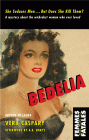 Today, Ms Caspary’s hard-boiled and yet romantic crime novels (such as Laura and Bedelia) are still in print and selling better than ever. New generations grant these classics considerable acclaim as early examples of feminist pulp fiction. Their paperback covers today (see Bedelia to the right) are reminiscent of 1940s Sam Spade. Also, the Academy Award-winning Les Girls was recently released on DVD as an example of the final years of MGM’s reign as the world's foremost producer of entertaining musicals. Outshining Gene Kelly, the real stars are the film's three leading femmes fantastique: Mitzi Gaynor, Taina Elg and Kay Kendall.


